 PARDESCO
Mandala Maker
Make a mandala coloring page that has never existed before, then print it. Set the symmetry and how much detail you want — the geometry is drawn live in your browser, so it is free, unlimited, and yours to print.
Design ------
Designs you've made this session
Six styles, six constructions
Each style is a different geometric construction, not a different setting. These are real pages from the generator; open one to keep editing it, or print it as it is.
-
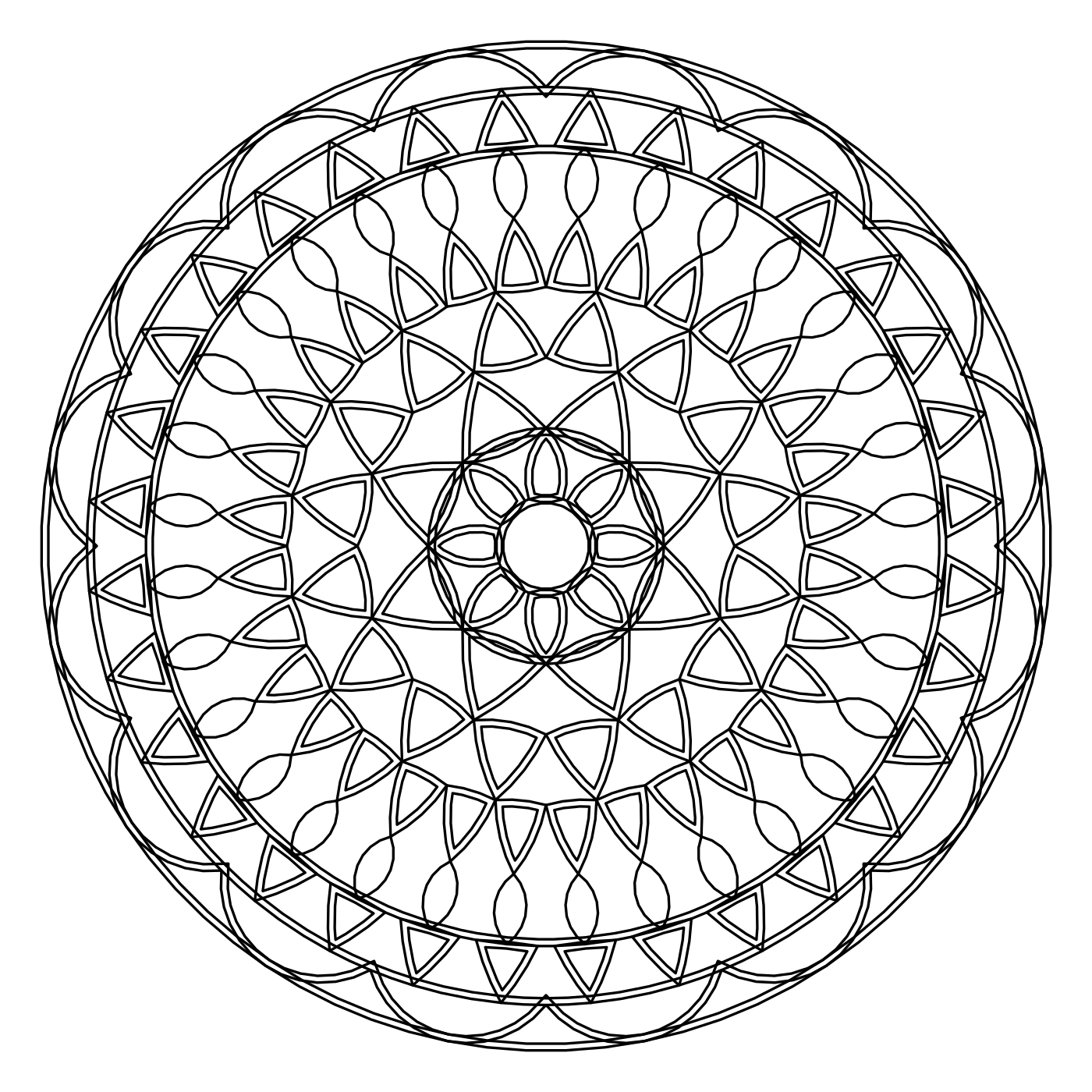
Padma: overlapping lotus petal rows, after Tibetan and Newar mandala painting. Open this design Download PNG -
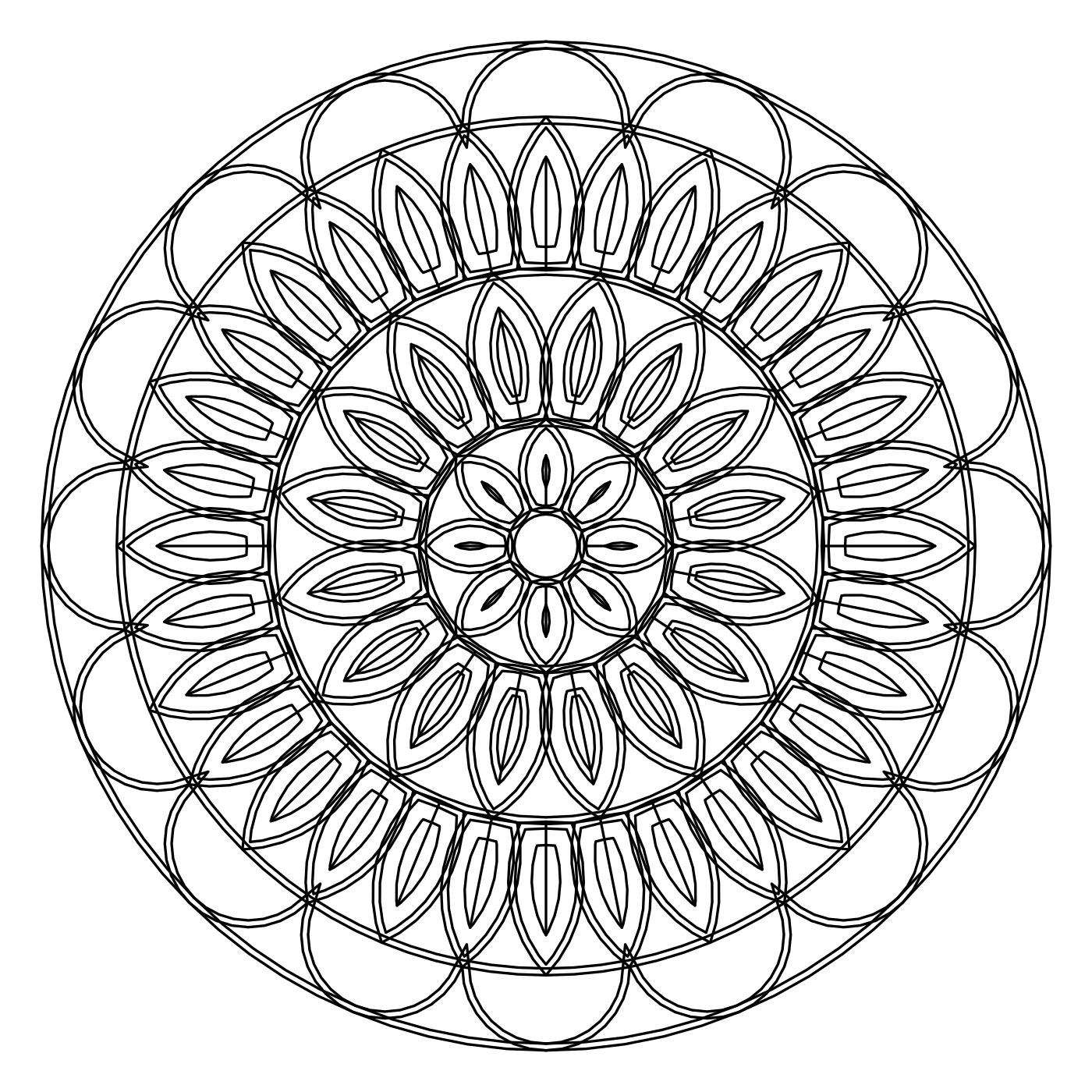
Bloom: broad rounded petals, each nested inside the next, easy to colour. Open this design Download PNG -
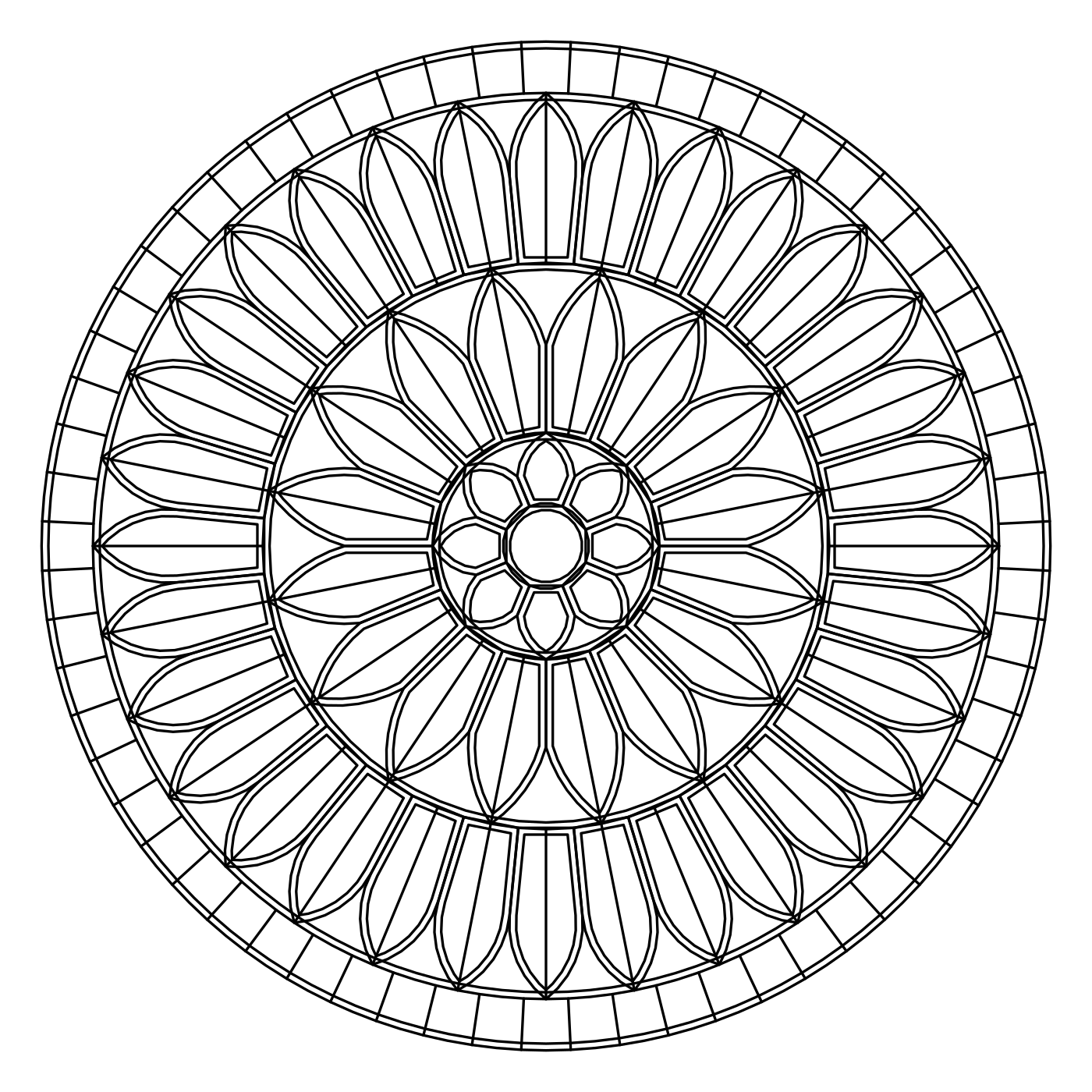
Lancet: tall pointed arches with central mullions, after early Gothic tracery. Open this design Download PNG -
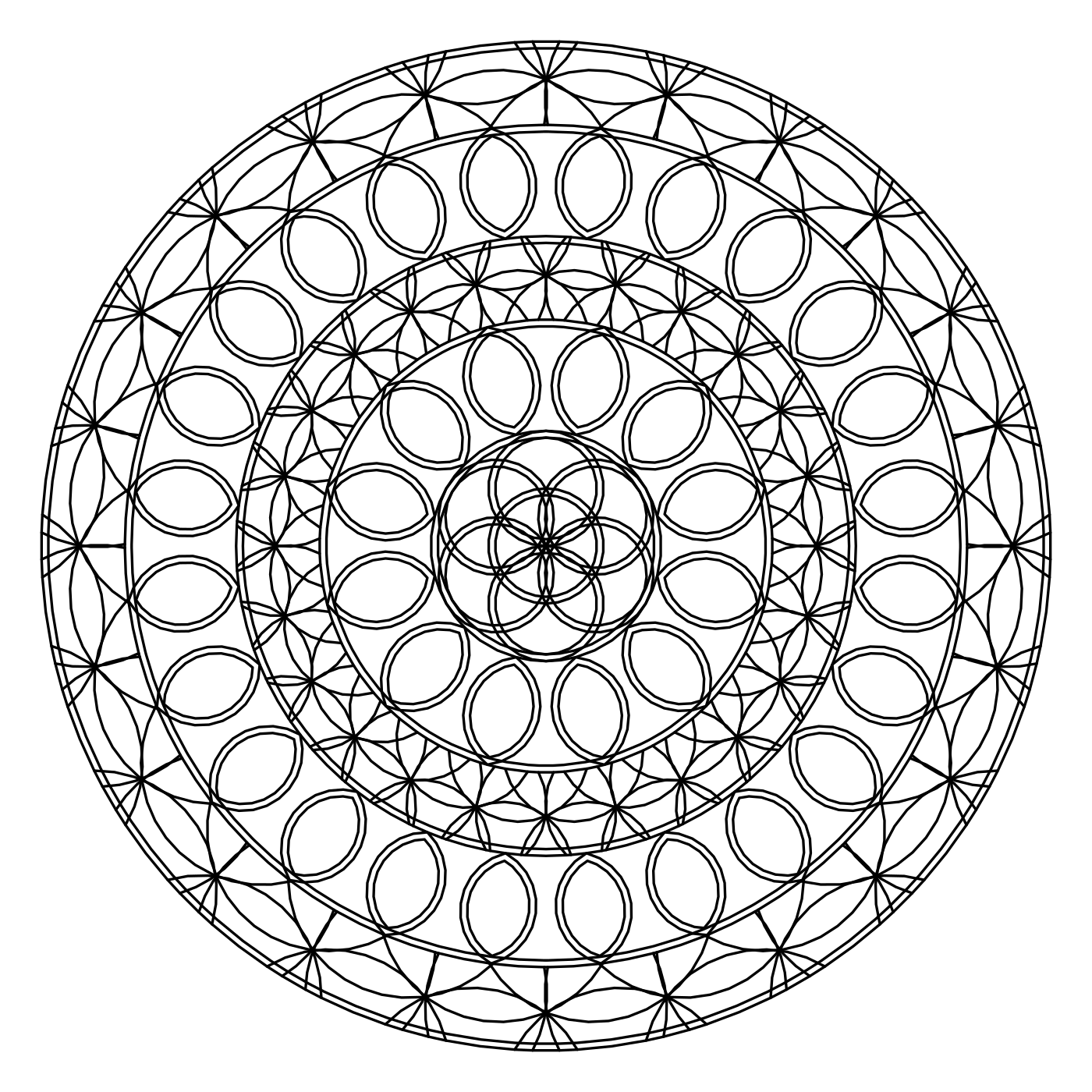
Mandorla: seed of life, vesica lenses and flower of life lattice, all compass construction. Open this design Download PNG -
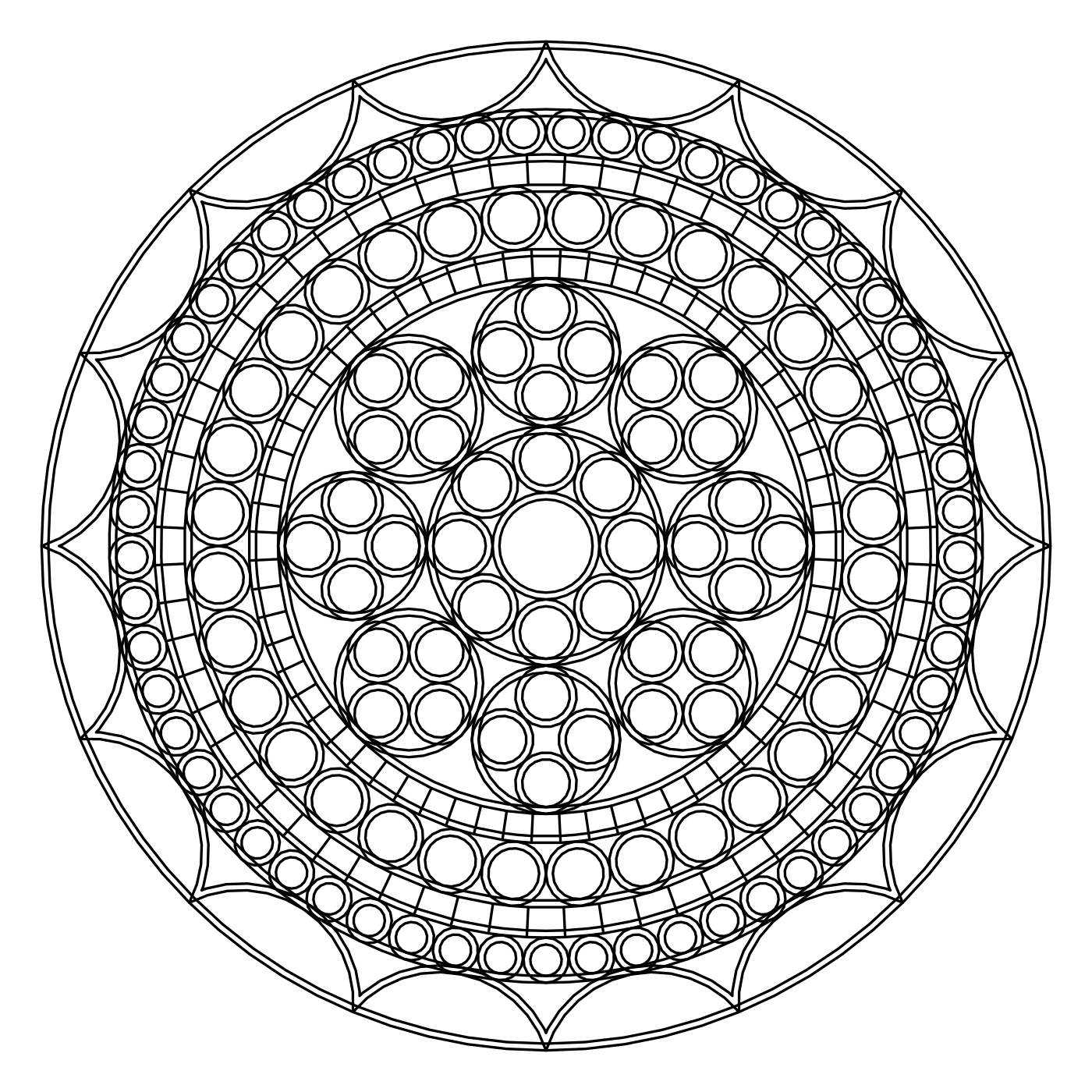
Oculus: Gothic rose window tracery, every circle tangent to its neighbours. Open this design Download PNG -
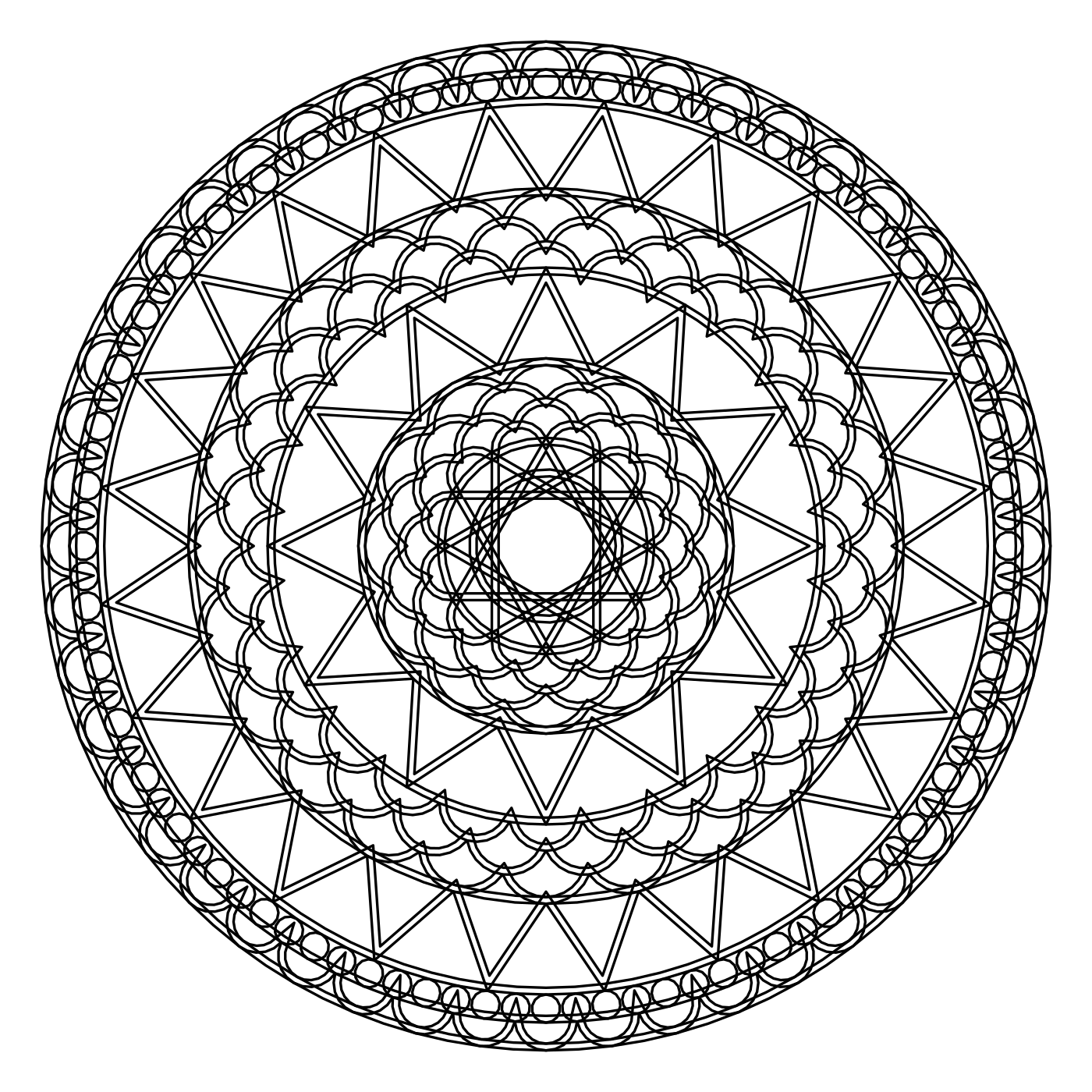
Filigree: star polygon core with fish-scale and chevron rings. Open this design Download PNG
Printable packs and the drawing workbook
How to use these mandala coloring pages
Every design here is generated from the same geometry that traditional mandalas use: a circle divided into equal sectors, with a motif repeated around each ring. Choosing 8-fold symmetry means the pattern repeats eight times around the circle; 16-fold packs it tighter. The detail slider adds rings and subdivides the motif counts, which is the difference between a page a six-year-old can finish and one that will absorb an adult for an hour.
Print on the heaviest paper your printer takes. Ordinary copier paper is fine for pencils, but markers bleed through it — 120gsm or card stock holds ink without ghosting onto the next page.
Frequently asked questions
Are these mandala coloring pages really free to print?
Yes. Generate as many as you like and download them at print resolution at no cost, with no account and no watermark. The designs are made in your browser, so there is nothing for us to meter.
Can I use these mandalas commercially?
Personal, classroom, and therapeutic use is free — print them for a class, a workshop, or a waiting room. Selling the pages themselves, or products made from them, needs a commercial licence; get in touch and we'll sort one out.
What size do the pages print at?
US Letter, A4, or square, with the design fitted inside a printable margin. PNG downloads are 300 DPI, which is full print quality on any home printer. The SVG is vector, so it scales to any size without going soft — useful if you want a poster-sized page.
Can I get the same mandala again later?
Every design has a short code shown under the preview and stored in the page address — something like
v4-K3F9Q1. Save or share that link and the same code regenerates the same mandala, on any
device.
The v4 is the generator version. The geometry does change occasionally as the drawing gets
better, and a design made under an older version will not come back identically — so instead of pretending
otherwise, the version is part of the code. Open an older link and the page tells you it was made with an
earlier generator and that you are seeing the current drawing of that seed. If you want a design to stay
exactly as it is, download the SVG or PNG: a file never changes.
Styles, and where they come from
Each style is a different construction, built from its own vocabulary of bands: Padma is interlocking rows of pointed lotus petals; Bloom is big round petals with smaller petals drawn inside them; Lancet is rings of tall pointed arches split by mullions; Mandorla is compass work, a seed of life, lens rings and flower-of-life lattices; Oculus is bands of tangent circles with trefoils inside them, after a rose window; Filigree is a star polygon under chevron rings and fish-scale fills, for fine pens. Three of them have a page explaining the construction they draw on, and saying plainly which parts of it are documented and which parts are ours:
- Padma — lotus mandalas: pointed petals in interlocking rows, after the lotus rings of Tibetan and Newar painting.
- Oculus — rose window mandalas: bands of tangent circles with foils inside them, sectioned rings and a cusped rim, after Gothic tracery.
- Mandorla — vesica and almond mandalas: the lens struck by two overlapping circles, the first figure a compass makes, and the overlapping-circle lattice built from it.
Bloom, Lancet and Filigree round out the set in the picker. None of the styles is a faithful reconstruction, and we don't present any of them as one.
More on mandalas
If you want the background rather than the printout, the complete guide to mandalas covers the Hindu and Buddhist traditions, sand mandalas and why they are destroyed, Jung's use of them in therapy, and what the research does and doesn't support. For the related geometry, see the Sri Yantra — the best-known yantra, and a stricter construction than anything here — or the wider survey of sacred geometry symbols and their meanings.